Building Language
💬 Band 4: Consolidating Communicators
Sentences are getting sturdy, and the first big question words arrive — what and where — along with comparing words like fast and slow. Your child is becoming a real conversation partner.
Below are all 24 concepts in this band, in series order — and each one is its own Woodland Friends storybook by Julia. Work through them top to bottom at your child's own pace. Each one shows the target words, a quick guide to what to do (understanding is what your child takes in — receptive language; using words is what they say — expressive language), and 3 toys from the library that practise it beautifully. It's completely normal for a child to be stronger at one than the other. You can add any toy to your Amazon cart individually, or grab all three at once — prices and availability vary by country, and the buttons always open your local Amazon.
Woodland Friends · the storybooks for this band
Every concept below will be its own cosy Woodland Friends storybook — all 24 for this band are in production now and arriving December 2026. Pop your name on the waitlist and you'll hear the moment they land.
See the Band 1 books in the shopWord kits in this band
Storybook 1 of 24 · Woodland Friends · in production
Between
Target words: between
Understanding · receptive
Park a cube BETWEEN two others: “the red one is BETWEEN the blues!” — squeeze your hands together to show it.
Using words · expressive
Set up sandwich puzzles: “where's the cow?… BETWEEN the horses!” — then let them hide things between for you to find.
Finding it tricky? Return to in/on/under for a warm-up, then add between as the special guest: “not in, not on — BETWEEN!”
Too easy? Precision building: “put the window between the doors, under the roof” — two position words per instruction.
Practise it through play · 3 toy picks


Storybook 2 of 24 · Woodland Friends · in production
Around and Through
Target words: around · through
Understanding · receptive
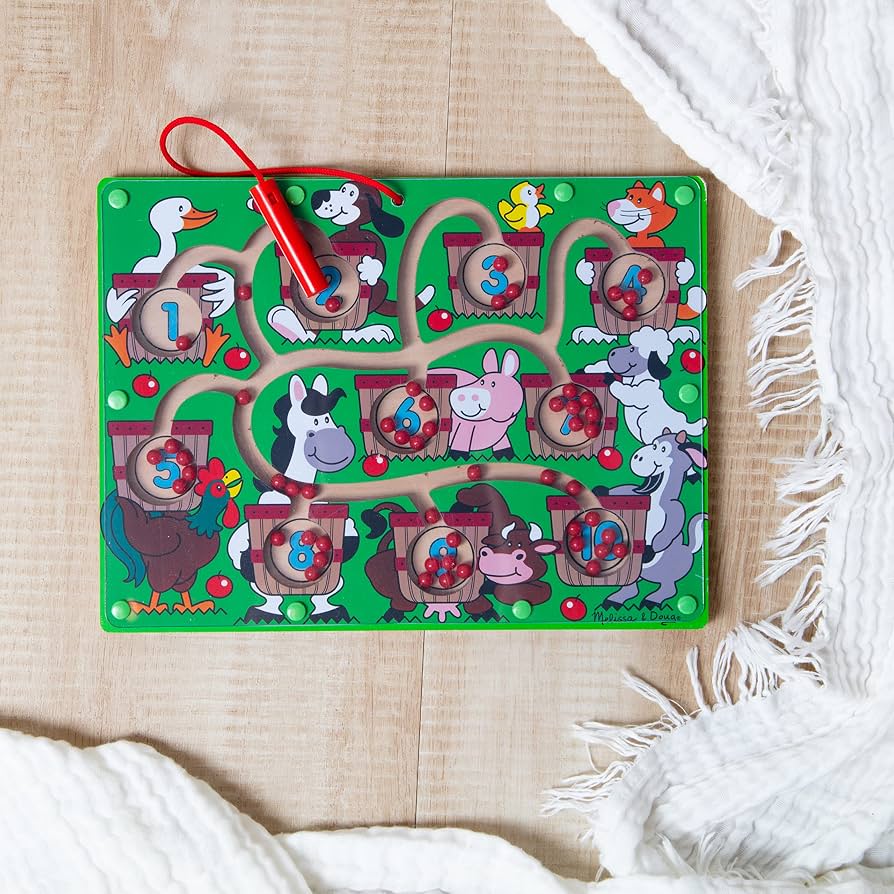
Run the wand AROUND the maze edge and the marble THROUGH the tunnel: “round and round… and THROUGH!”
Using words · expressive
Pause the marble at the tunnel mouth: “where's it going?… THROUGH!” — the toy rewards the word instantly.
Finding it tricky? Make it physical: walk around the table, crawl through a blanket tunnel — body first, toy second.
Too easy? Route descriptions: “it went around the bend and through the gate!” — journey words become storytelling.
Practise it through play · 3 toy picks


Storybook 3 of 24 · Woodland Friends · in production
Top, Middle, Bottom
Target words: top · middle · bottom
Understanding · receptive
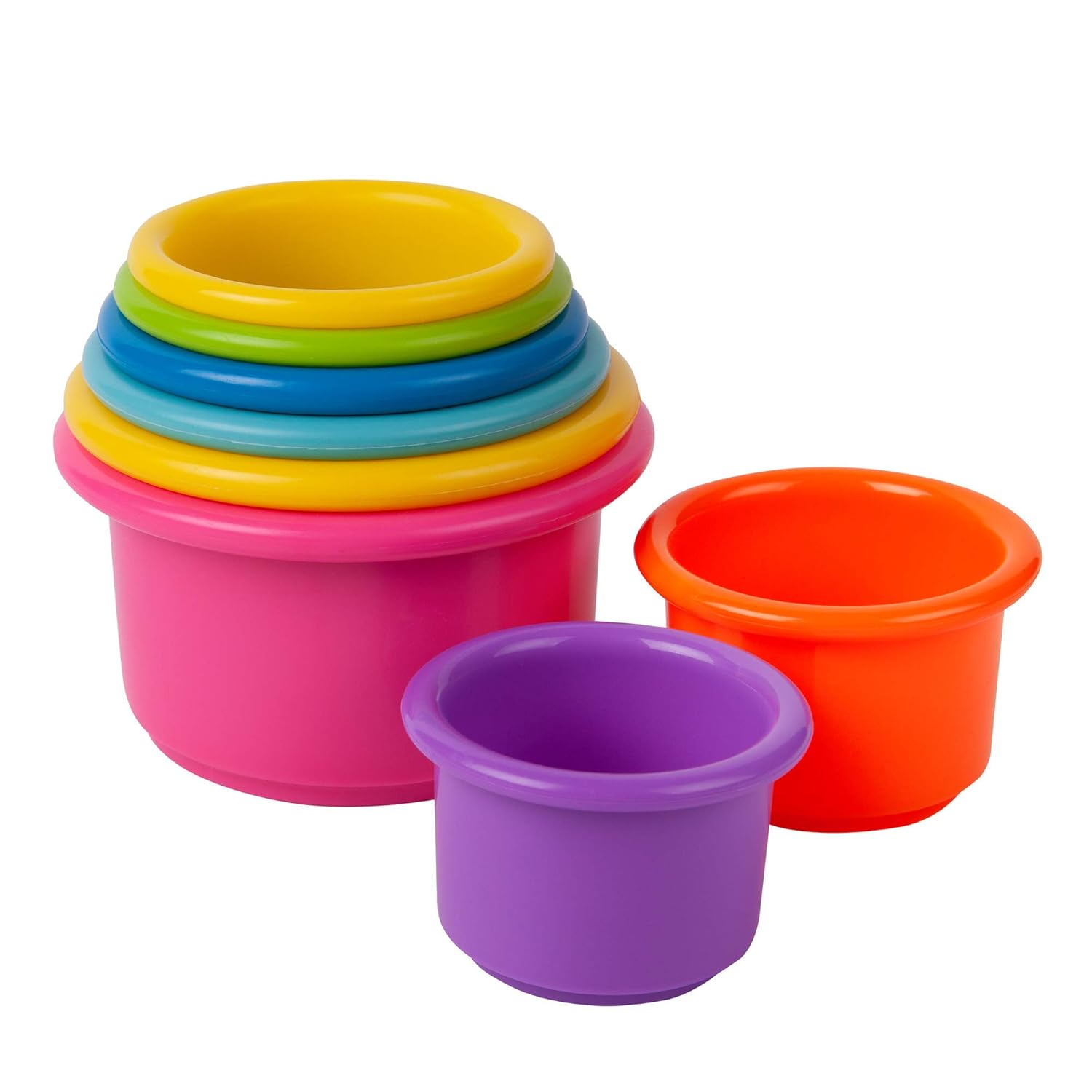
Build three-layer stacks: “red on TOP, blue in the MIDDLE, green at the BOTTOM.” Tap each layer as you name it.
Using words · expressive
Quiz the tower: “where's the blue one?” — “in the MIDDLE!” Then rebuild to their spoken design.
Finding it tricky? Just top and bottom first — the middle joins once the ends are solid.
Too easy? Apply it everywhere: book pages, shelves, their own body — “tummy is in the middle!” — then four layers.
Practise it through play · 3 toy picks
Storybook 4 of 24 · Woodland Friends · in production
A Little Less
Target words: less · a little less
Understanding · receptive
Pour and compare out loud: “you have less… now a LITTLE less… now much less!” Watch the levels together.
Using words · expressive
Give them the control: “do you want less?” — respond to “a little less!” with a tiny pour so precision pays.
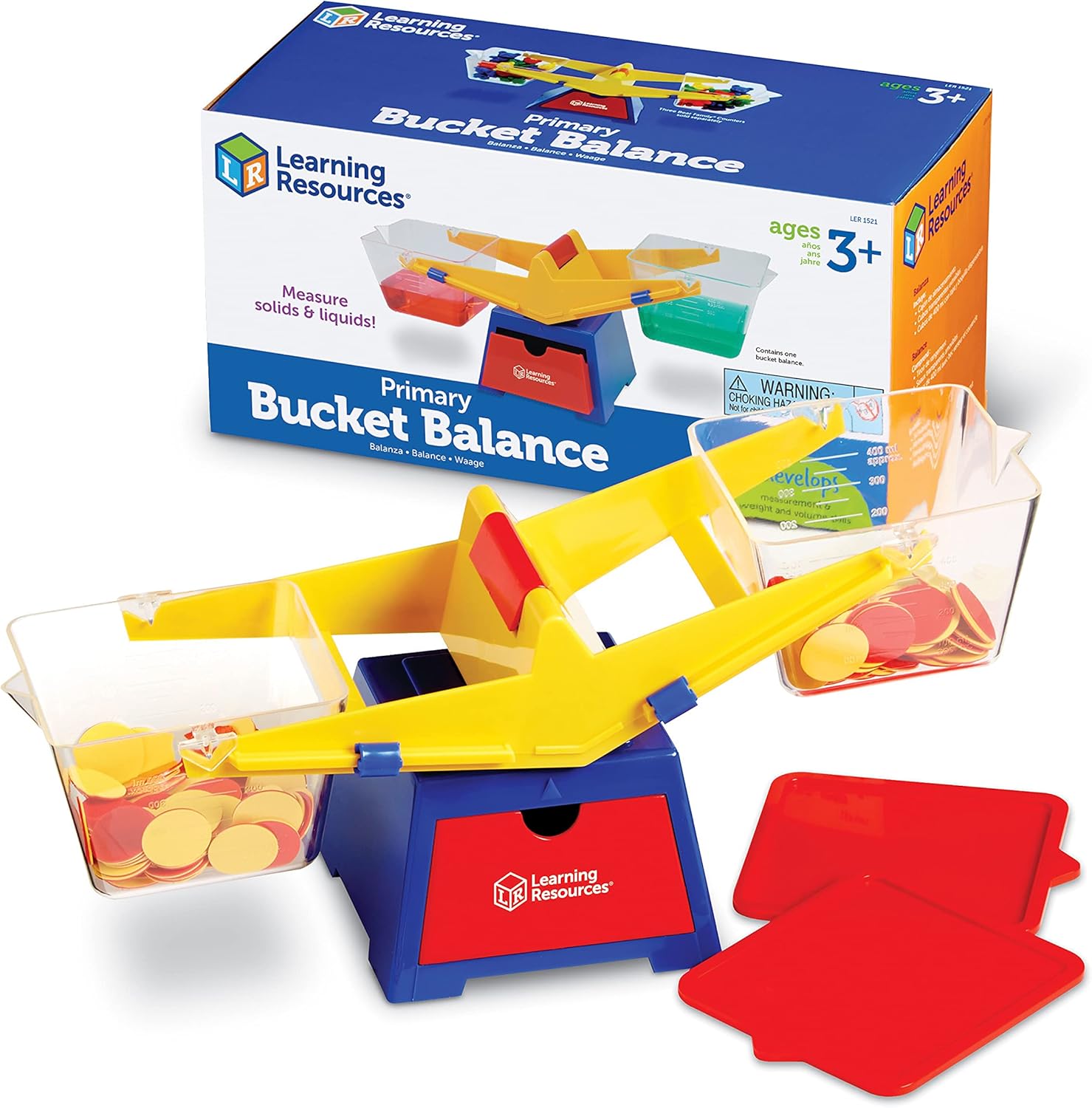
Finding it tricky? Anchor the plain more/less contrast on the balance first — “this side has less, see it go up!”
Too easy? Fine-tune with fair shares: “too much — take a little less” — negotiation vocabulary for the sandpit.
Practise it through play · 3 toy picks
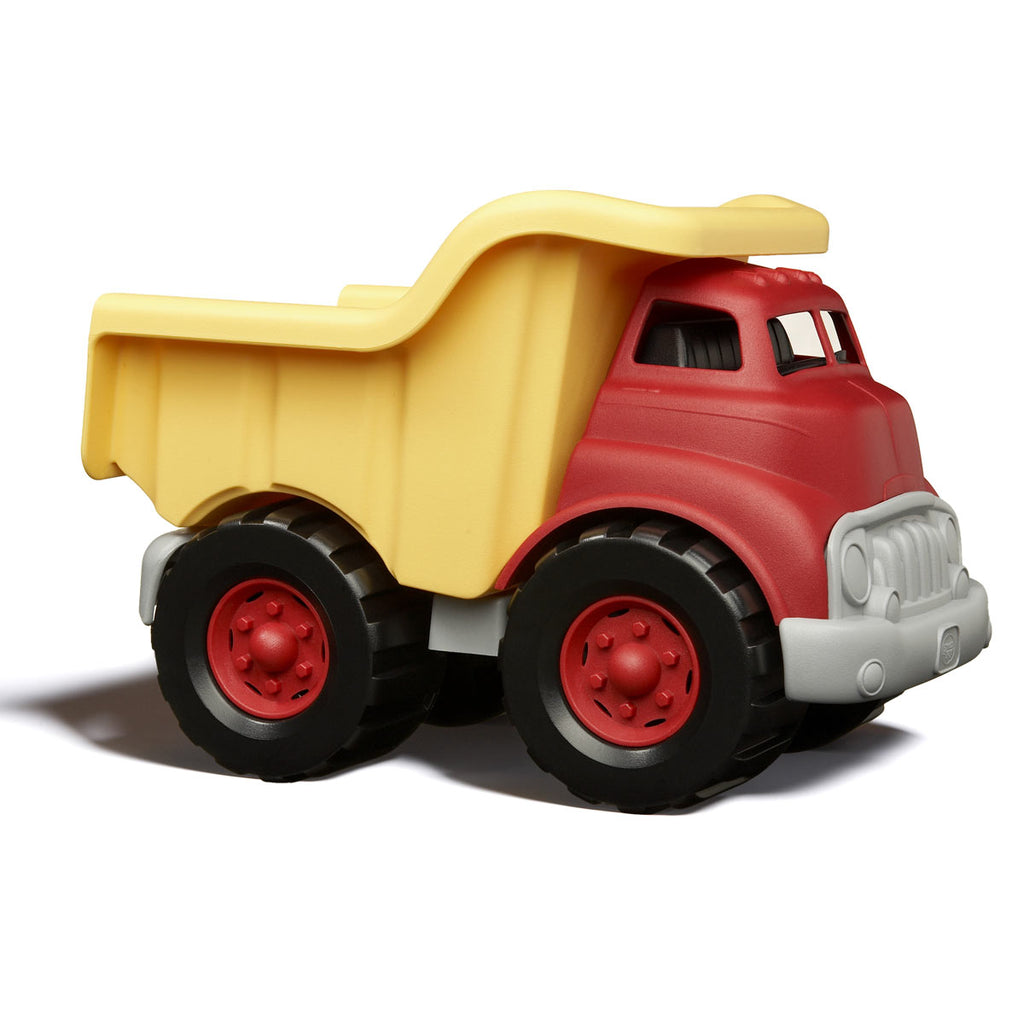
Storybook 5 of 24 · Woodland Friends · in production
Half for You
Target words: half · whole
Understanding · receptive
Cut the wooden food dramatically: “one whole tomato… chop! Two HALVES. HALF for you, half for me.”
Using words · expressive
Serve and share: “do you want the WHOLE one or HALF?” — their answer changes what they get, so the word matters.
Finding it tricky? Focus on the fair-share moment: “half for you, half for me” as a chant during every snack split.
Too easy? Rebuild the wholes: “two halves make a WHOLE!” — then quarters for the fearless.
Practise it through play · 3 toy picks
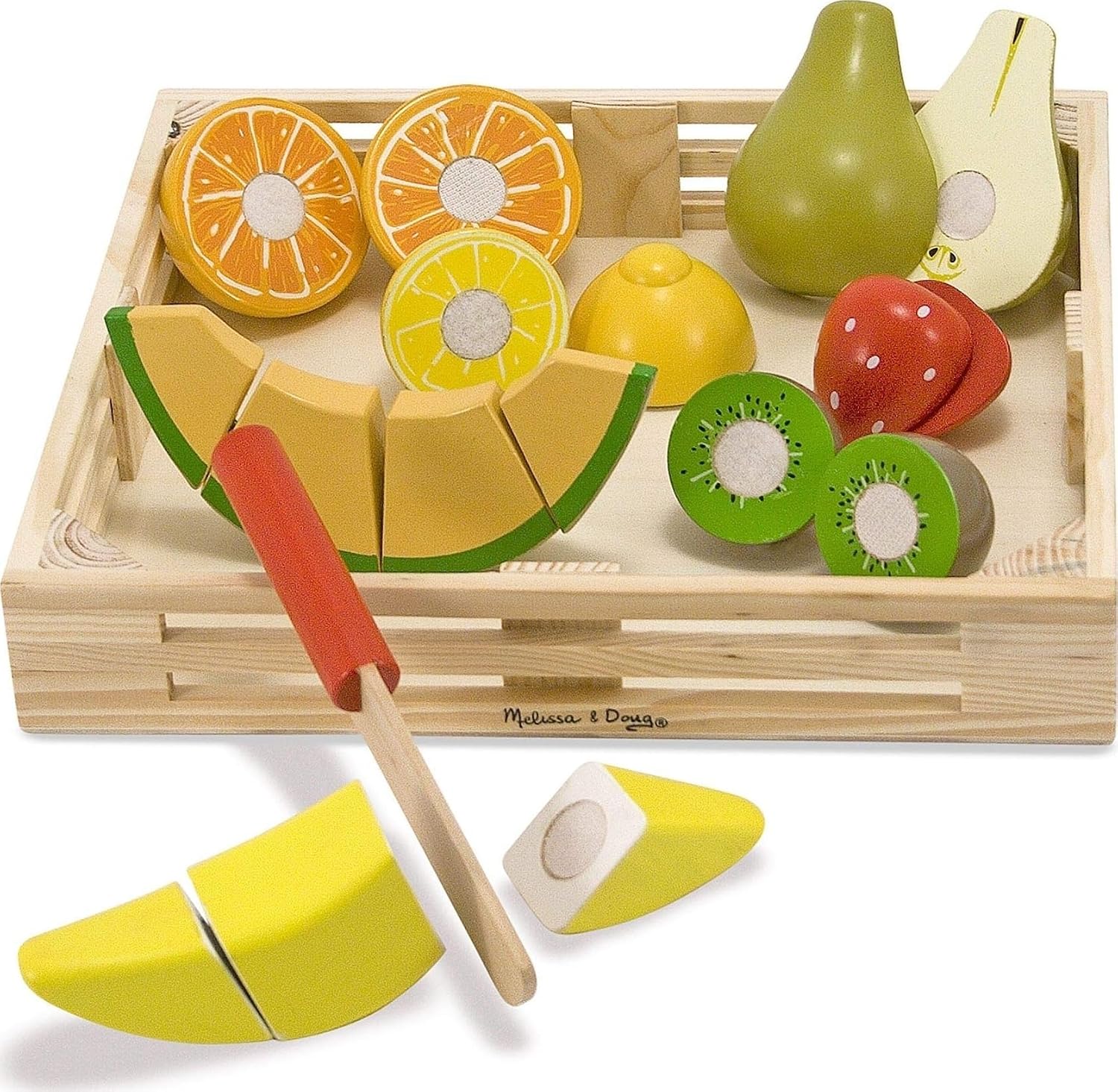
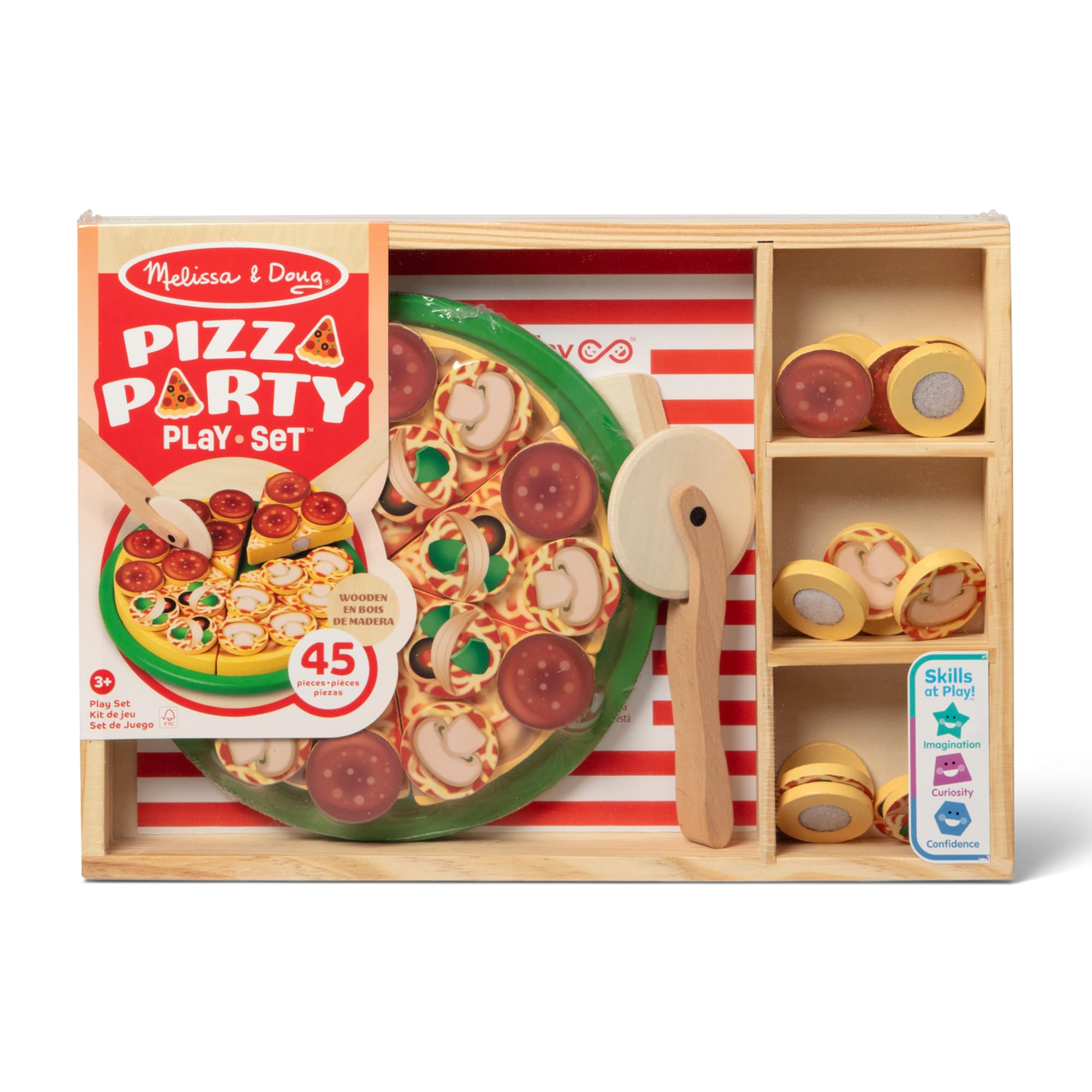

Storybook 6 of 24 · Woodland Friends · in production
One Each
Target words: one each · sharing out
Understanding · receptive
Deal things out slowly: “one for you, one for me, ONE EACH.” Point around the circle as everyone gets theirs.
Using words · expressive
Let them be the dealer at the tea party: “give everyone one each!” — then count the proof: “one, one, one — one each!”
Finding it tricky? Chant the rhythm: “one for you… one for me…” — the “each” idea rides in on the turn-taking.
Too easy? Complicate the deal: “two each!”, “one each for the animals, none for the truck” — sharing rules get precise.
Practise it through play · 3 toy picks
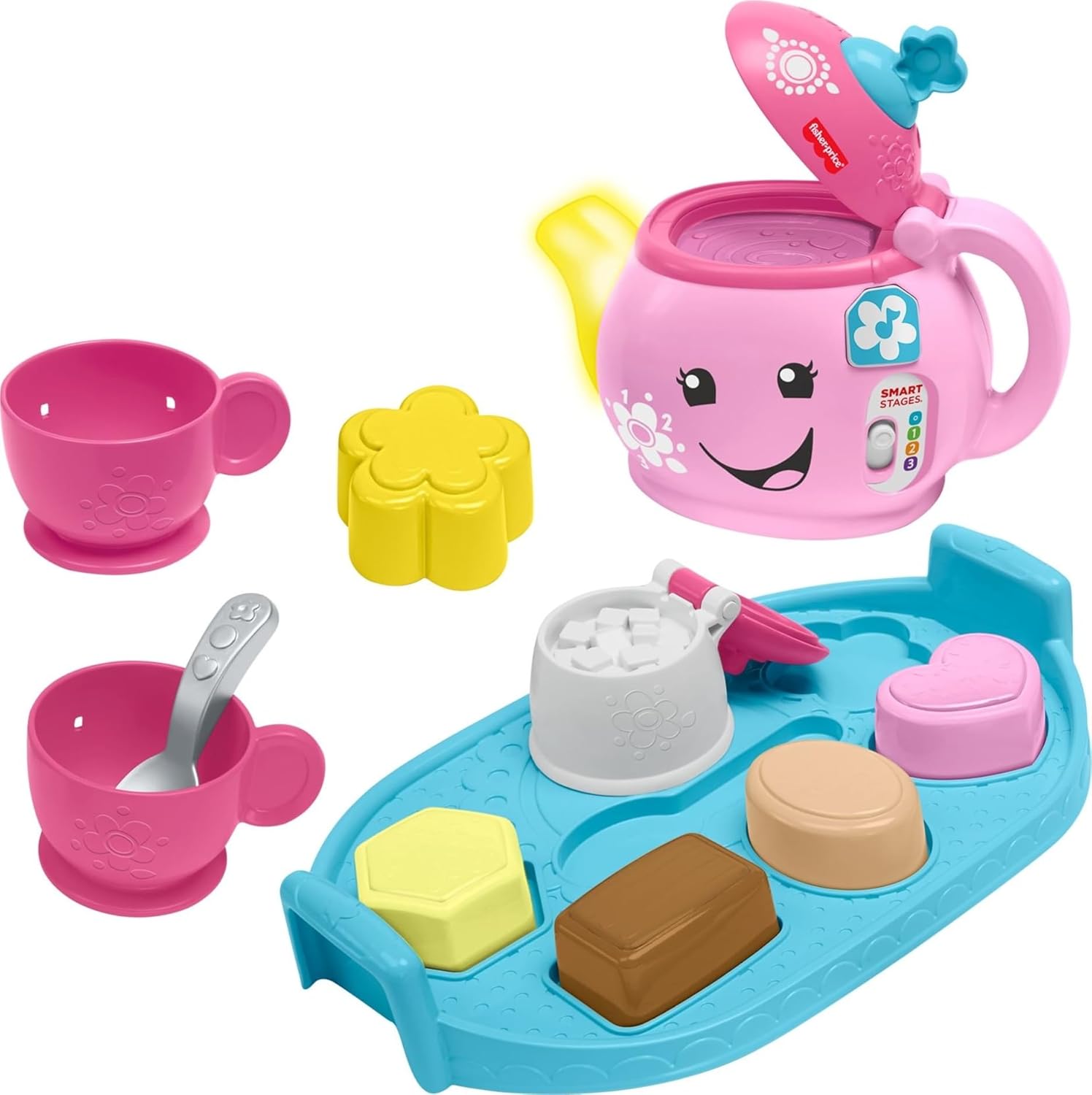
Storybook 7 of 24 · Woodland Friends · in production
First and Last
Target words: first · last
Understanding · receptive
Line up for everything: “the red cup is FIRST… the green one is LAST.” Races make it unmissable.
Using words · expressive
Run toy races and demand the podium report: “who was first?… who came LAST?” — cheer both answers equally.
Finding it tricky? Anchor “first” alone in routines — “you go first!” — last joins once first is beloved.
Too easy? Preview ordinals: “first, second, third!” — and flip perspectives: “last in the race, first to snack!”
Practise it through play · 3 toy picks


Storybook 8 of 24 · Woodland Friends · in production
What Comes Next?
Target words: predicting · patterns
Understanding · receptive
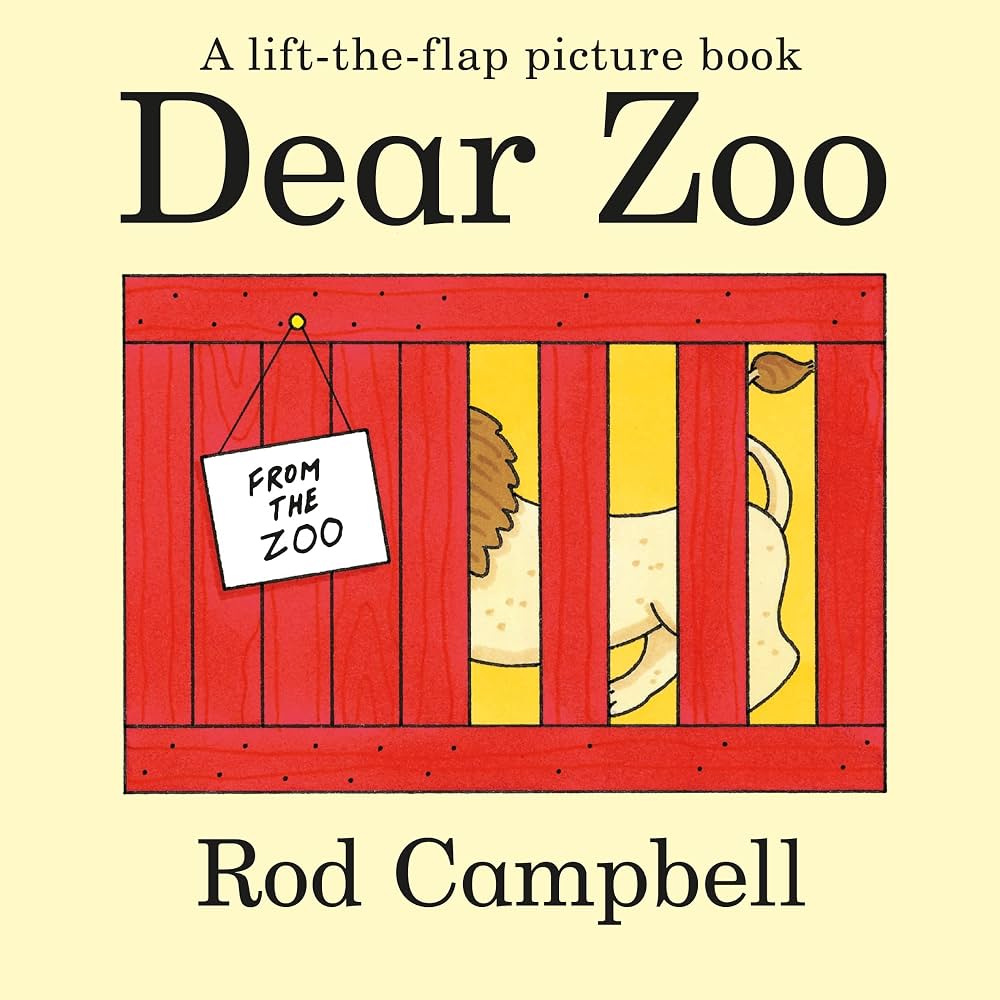
Build patterns and pause: “red, blue, red, blue… what comes NEXT?” Lift the flap slowly: “what's next?”
Using words · expressive
Wait at every pattern gap for the prediction, then test it together: “you said blue… let's see… BLUE! You knew!”
Finding it tricky? Two-colour patterns with big pauses — and accept a point as the prediction, voicing it for them: “blue comes next!”
Too easy? Harder patterns and justifications: “how did you know?” — “because red, blue, red, blue!” Reasoning is showing.
Practise it through play · 3 toy picks

Storybook 9 of 24 · Woodland Friends · in production
Before We Eat
Target words: before (routines)
Understanding · receptive
Flag the befores in every routine: “BEFORE we eat, we wash hands. Before bed, we brush teeth.”
Using words · expressive
Quiz the routine kindly: “what do we do before eating?” — act shocked at wrong answers: “pyjamas?! Noo — wash hands!”
Finding it tricky? Keep first/then as the training wheels: “FIRST wash, THEN eat” — before is the same idea in fancier clothes.
Too easy? Swap the order in questions: “do we eat before we wash, or wash before we eat?” — order words under pressure.
Practise it through play · 3 toy picks

Storybook 10 of 24 · Woodland Friends · in production
Now and Later
Target words: now · later
Understanding · receptive
Split time into NOW and LATER out loud: “we play NOW… cake comes LATER.” Point at the calendar's now and later.
Using words · expressive
Offer scheduling choices: “bubbles now or later?” — then honour the answer visibly, so the words control real time.
Finding it tricky? Shrink “later” to one minute so it never feels like “no” — trust in the word comes before love of it.
Too easy? Build out the timeline: “now, later, TOMORROW” — and let them schedule the play: “first this now, that later!”
Practise it through play · 3 toy picks
Storybook 11 of 24 · Woodland Friends · in production
Fast and Slow
Target words: fast · slow
Understanding · receptive
Race the pull-back cars at two speeds: “this one's FAST! this one's slooooow.” Your voice speed does the teaching.
Using words · expressive
Take speed orders: “fast or slow?” — then drum, drive or pop at exactly the speed they name. Power teaches.
Finding it tricky? Act the words with your whole body — zoom fast, trudge slow — and say the word mid-movement.
Too easy? Compare and rank: “which was faster?… the red one's the FASTEST!” — speed meets comparisons.
Practise it through play · 3 toy picks


Storybook 12 of 24 · Woodland Friends · in production
Same Kind
Target words: categories (first sort)
Understanding · receptive
Sort the food into families: “apples and bananas — these are all FRUIT! Same kind!”
Using words · expressive
Hold up a straggler: “where does the carrot go?” — wait for the group name or the point, then confirm: “with the vegetables — same kind!”
Finding it tricky? Two very different groups only — animals versus food — and sort by throwing into two clearly separated tubs.
Too easy? Name the categories themselves: “fruit, animals, vehicles” — then play odd-one-out inside a single group.
Practise it through play · 3 toy picks


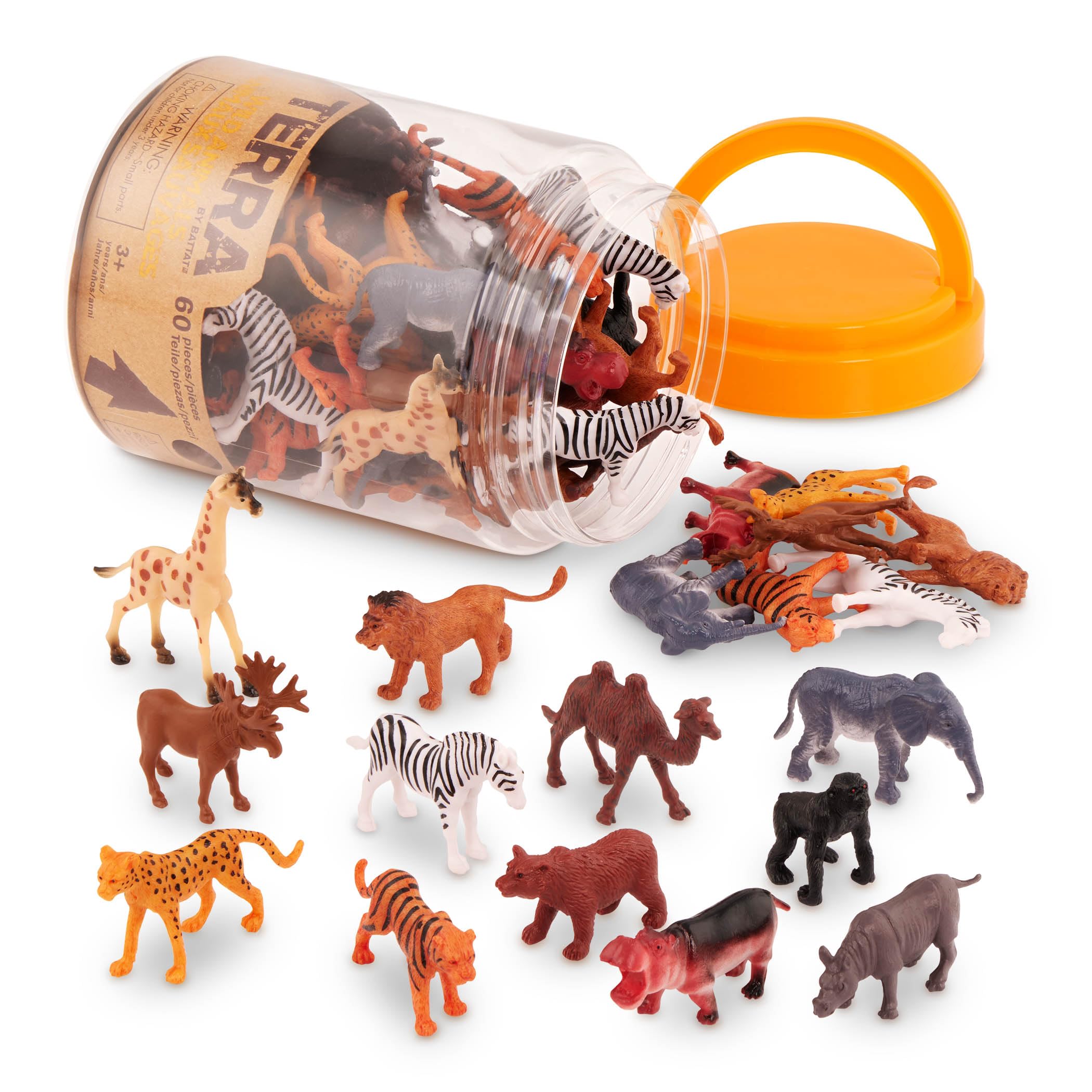
Storybook 13 of 24 · Woodland Friends · in production
Fat and Thin, Wide and Narrow
Target words: fat · thin · wide · narrow
Understanding · receptive
Roll Play-Doh worms FAT and THIN, roads WIDE and NARROW: “the fat worm… the thiiiiin worm.”
Using words · expressive
Take building orders: “fat or thin snake?” — make exactly what they say, then swap roles and follow their build.
Finding it tricky? Lean on big/little first, then upgrade the words: “it's little AND thin!” — new labels for familiar ideas.
Too easy? Apply to the world: “the gate is narrow — squeeze through! the road is wide.” Precision describing in the wild.
Practise it through play · 3 toy picks
Storybook 14 of 24 · Woodland Friends · in production
Bigger and Bigger
Target words: comparatives -er
Understanding · receptive
Grow things step by step: “big… BIGGER… look, it's getting BIGGER and BIGGER!” Add a cube per beat.
Using words · expressive
Build rival towers: “make yours bigger!” — then compare aloud: “yours is bigger!” — the -er lands with the win.
Finding it tricky? Keep it at big/small until secure, then stretch just one: “big… BIGGER!” with an ever-growing tower.
Too easy? Full comparative sentences with than: “my snake is longer than yours!” — competition powers grammar.
Practise it through play · 3 toy picks
Storybook 15 of 24 · Woodland Friends · in production
I Jumped
Target words: regular past -ed
Understanding · receptive
Recap actions with -ed the moment they finish: “you jumped! it popped! we clapped!”
Using words · expressive
Play “what did you do?” right after the action: “I jumped!” — instant replay is the -ed classroom.
Finding it tricky? Model in the mirror moment without demanding: they land, you say “JUMPED!” — pure exposure, zero pressure.
Too easy? String past-tense reports: “I jumped and then it popped!” — then tell someone else together at dinner.
Practise it through play · 3 toy picks

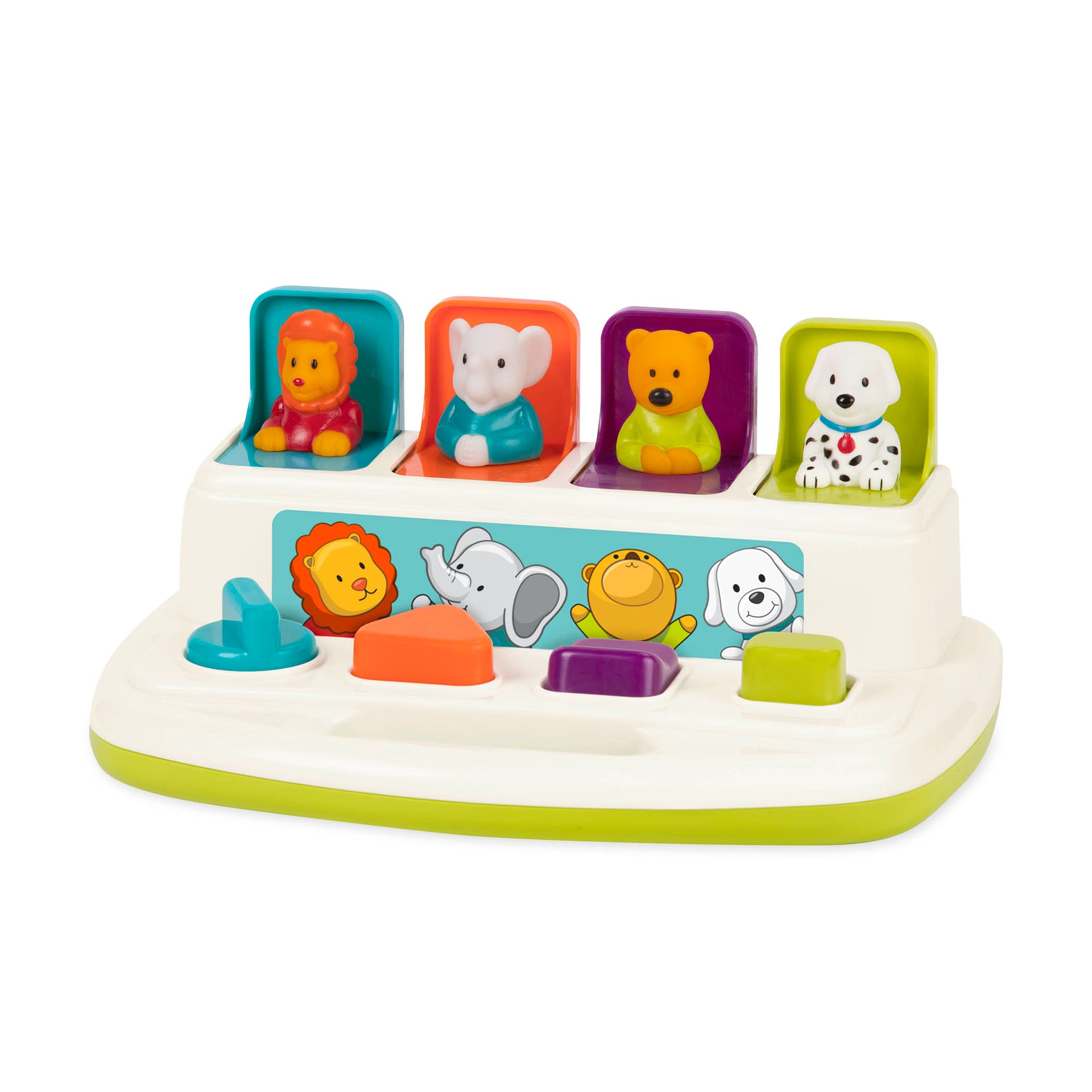
Storybook 16 of 24 · Woodland Friends · in production
She Runs
Target words: 3rd person -s (he runs · cow goes)
Understanding · receptive
Narrate what each animal does with the -s singing: “the cow eatS. the duck swimS. she runS!”
Using words · expressive
Play “what does it do?”: hold up an animal and wait — “it jumpS!” Echo with the s intact every time.
Finding it tricky? Don't correct the missing s — recast warmly: “cow eat? Yes! The cow eatS.” They hear the repair, not a telling-off.
Too easy? Contrast persons: “I run… she runS. You jump… he jumpS” — the little s that changes with who.
Practise it through play · 3 toy picks


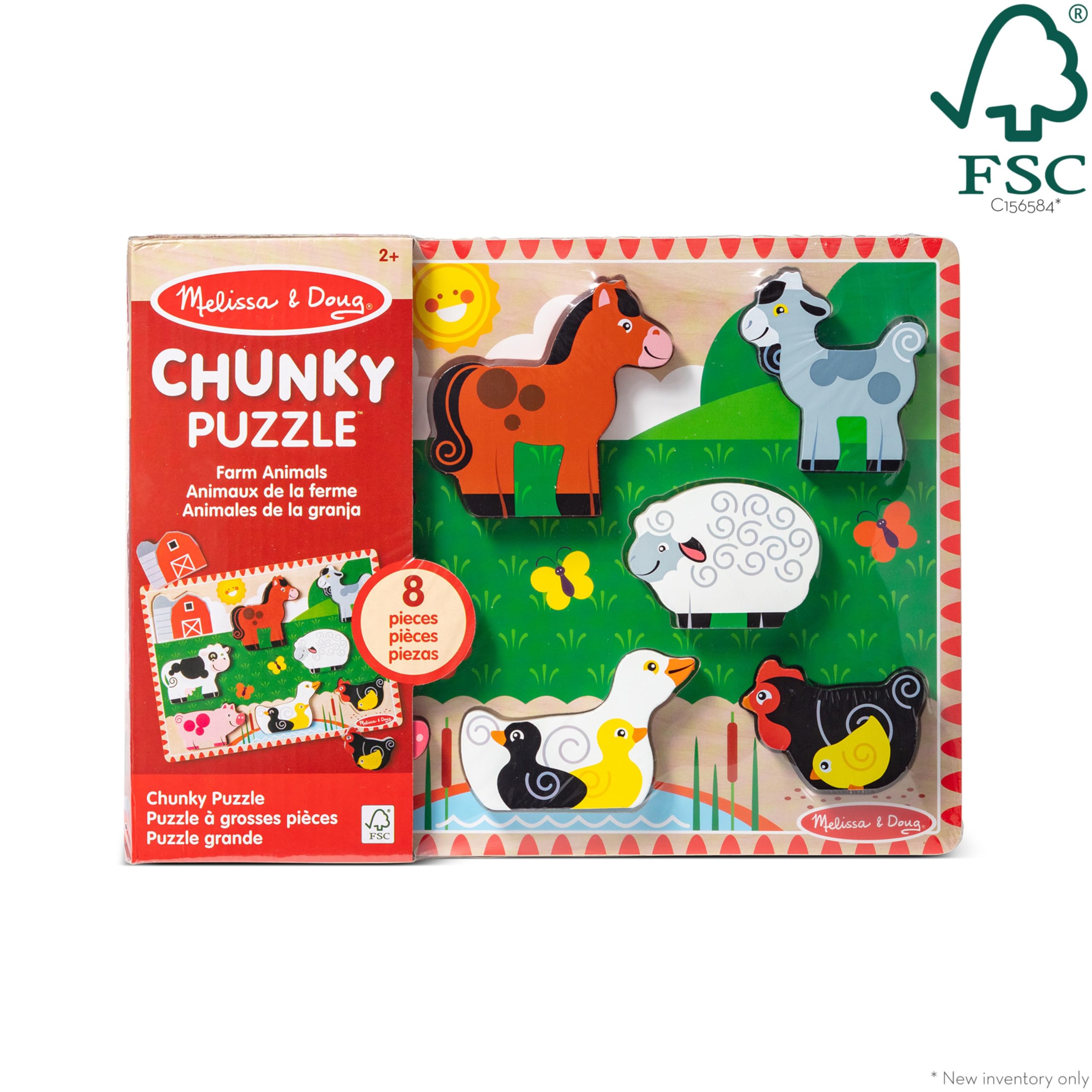
Storybook 17 of 24 · Woodland Friends · in production
A Dog, The Dog
Target words: articles a · the
Understanding · receptive
Read with pointed articles: “A dog! … THE dog is back!” First meeting gets “a”, old friends get “the”.
Using words · expressive
Flip pages asking “what's that?” and model the article in your echo: “a cat! and look — THE cat again!”
Finding it tricky? Never correct “dog!” — just recast: “yes, A dog!” — articles are absorbed, not taught.
Too easy? Play the which-one game: “pass me A block… now THE red block” — any block versus that exact one.
Practise it through play · 3 toy picks


Storybook 18 of 24 · Woodland Friends · in production
He and She
Target words: he · she
Understanding · receptive
Assign characters and keep the pronouns flowing: “HE lost his hat! SHE found it. He's happy now!”
Using words · expressive
Ask about the cast: “what's he doing?… where did she go?” — wait for he/she answers and rebuild names into pronouns.
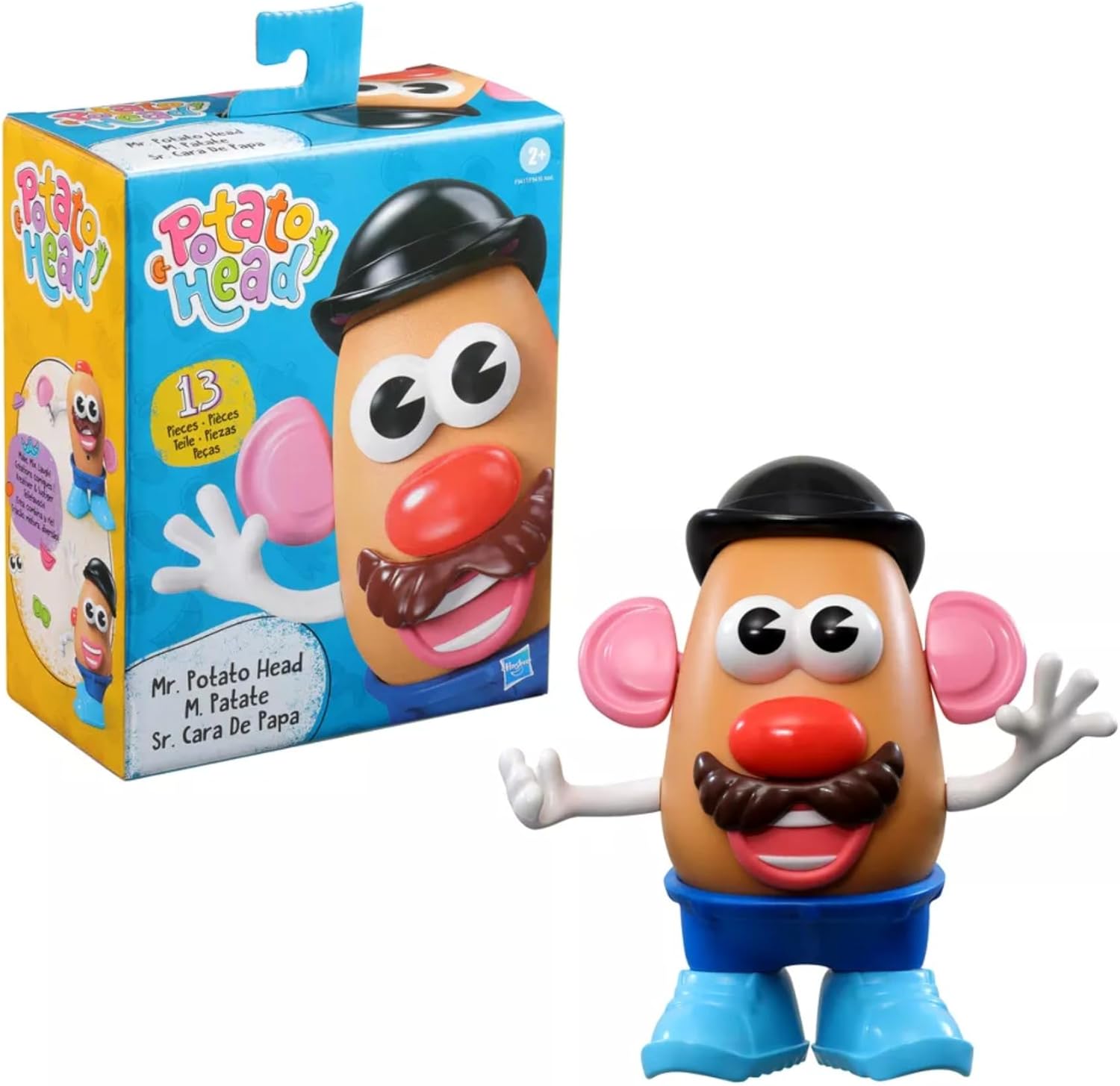
Finding it tricky? Anchor pronouns to fixed characters — Mr Potato Head is always “he”, the girl figure always “she” — consistency first.
Too easy? Mixed-cast stories where he and she both act: “he cooked and she drove!” — swapping pronouns mid-sentence.
Practise it through play · 3 toy picks
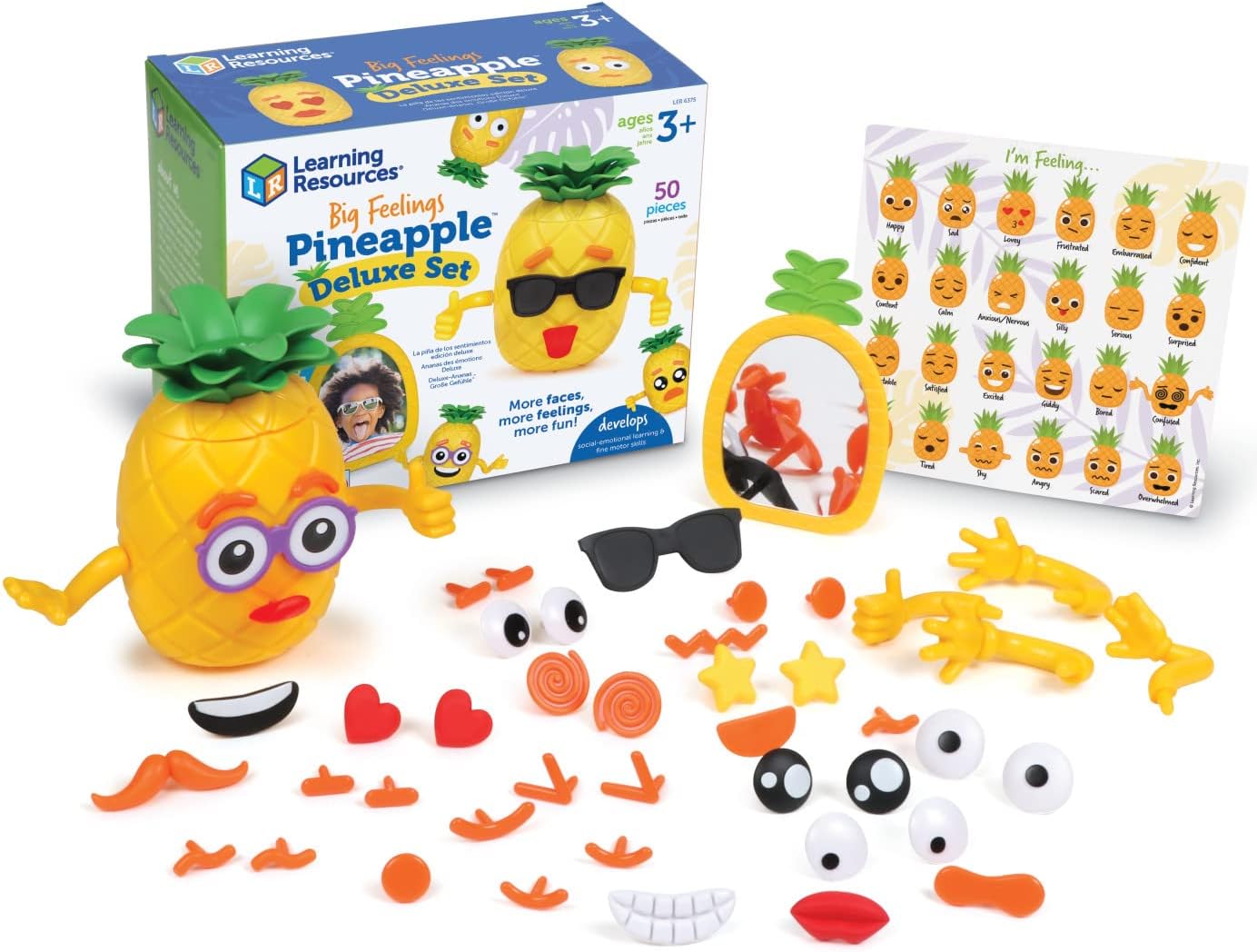
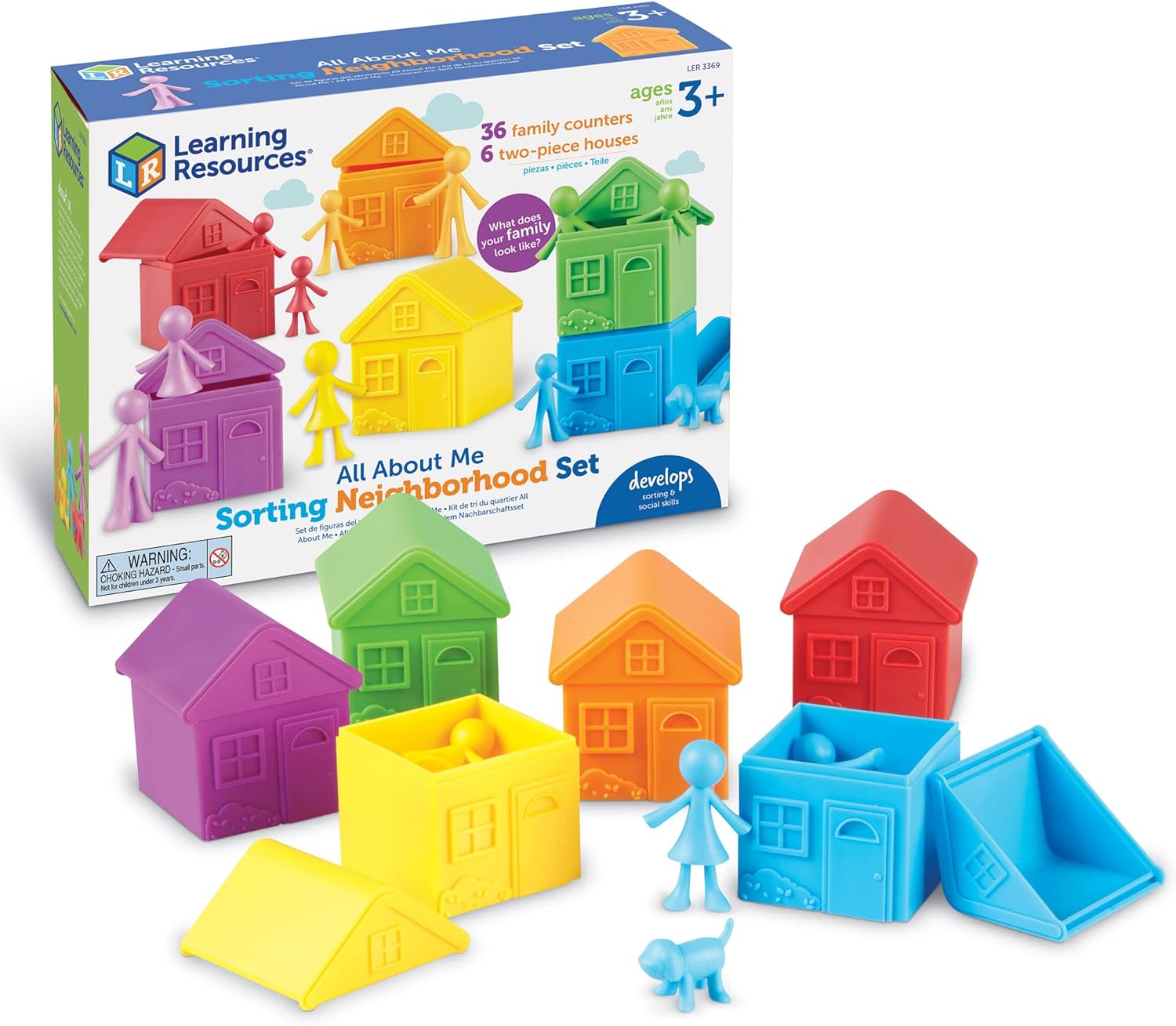
Storybook 19 of 24 · Woodland Friends · in production
That's Not a Cat
Target words: denial (not a …)
Understanding · receptive
Make silly mistakes on purpose: hold up a cow — “here's the cat!” — and enjoy the outrage: “that's NOT a cat!”
Using words · expressive
Keep mislabelling solemnly and wait for the full protest sentence: “it's NOT a cat — it's a COW!”
Finding it tricky? Accept “no!” plus the right name as a win, and model the long form back: “right! It's NOT a cat.”
Too easy? Chain the correction with evidence: “it's not a cat because it says moo!” — denial meets reasoning.
Practise it through play · 3 toy picks
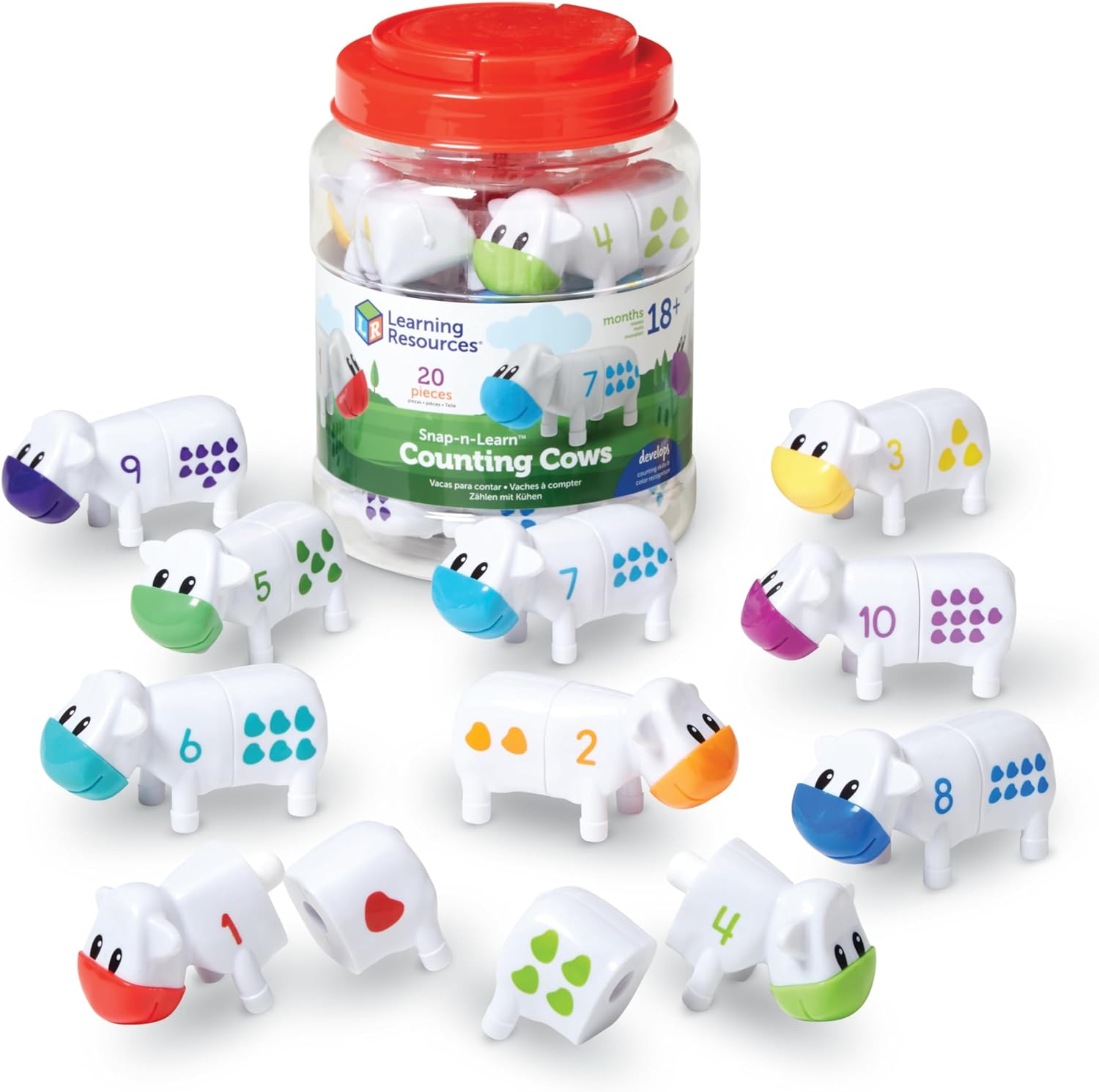
Storybook 20 of 24 · Woodland Friends · in production
I Can't
Target words: can't (inability)
Understanding · receptive
Voice the struggle warmly when something is stuck: “you CAN'T open it — it's too tight! Let's try together.”
Using words · expressive
Engineer gentle challenges (tight lids, tricky pieces) and model the request that fixes everything: “I can't do it — help please!”
Finding it tricky? Accept “stuck!” or a hand-over as the message, and voice it for them: “you CAN'T open it. Mummy can help.”
Too easy? Contrast abilities: “I can't reach, but YOU can!” — can and can't in one proud sentence.
Practise it through play · 3 toy picks
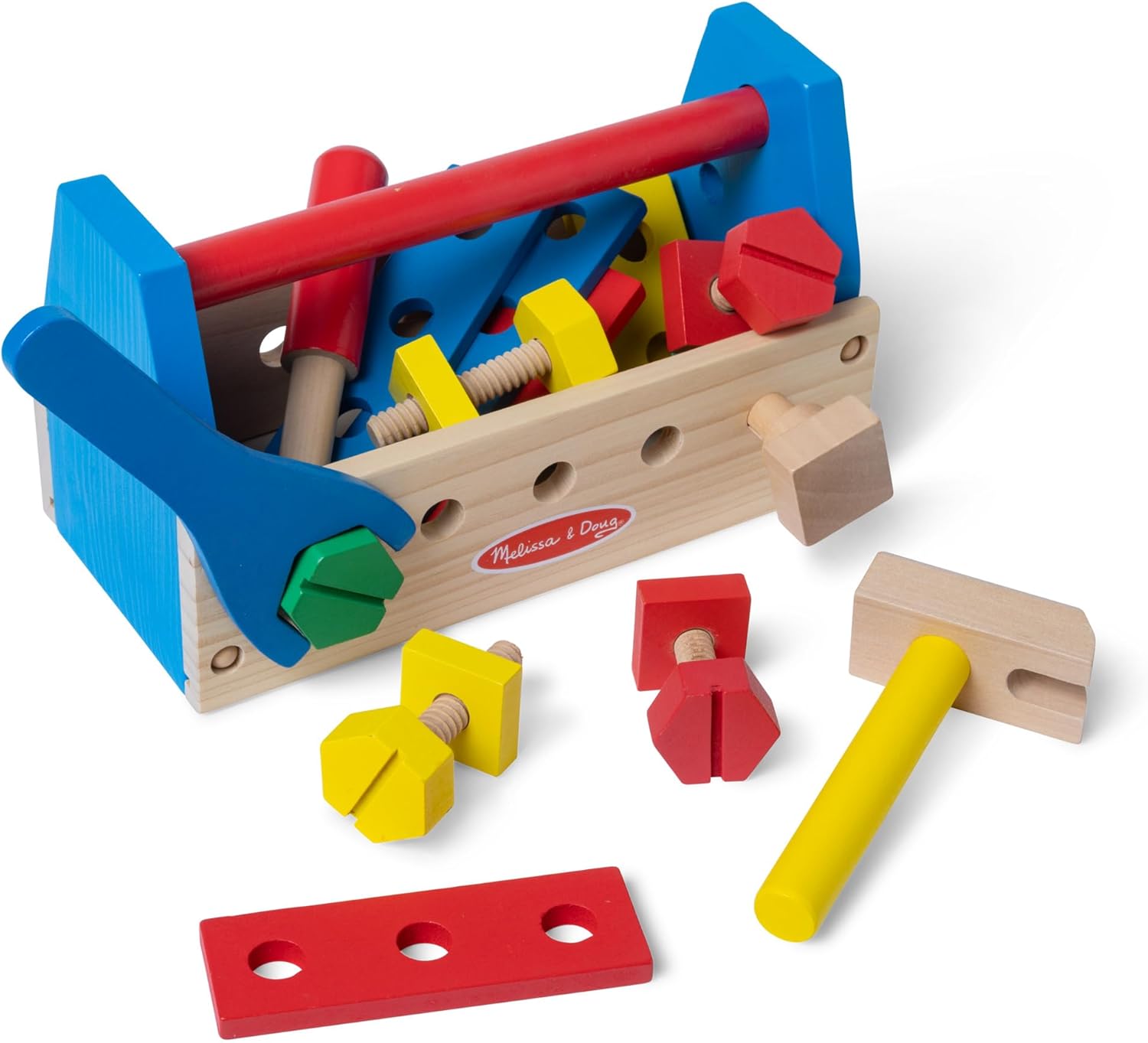
Storybook 21 of 24 · Woodland Friends · in production
What and Where?
Target words: first question words
Understanding · receptive
Flood play with what/where questions and answer them yourself at first: “WHERE'S the pig? … THERE he is! WHAT'S that? A tractor!”
Using words · expressive
Hide pieces and swap the asker role: now THEY ask “where's the cow?” and you answer. Asking is the goal, not just answering.
Finding it tricky? One question type at a time — a week of where, then a week of what — each anchored to hiding games.
Too easy? Answer with full locations: “WHERE is he? BEHIND the barn!” — question words meet position words.
Practise it through play · 3 toy picks
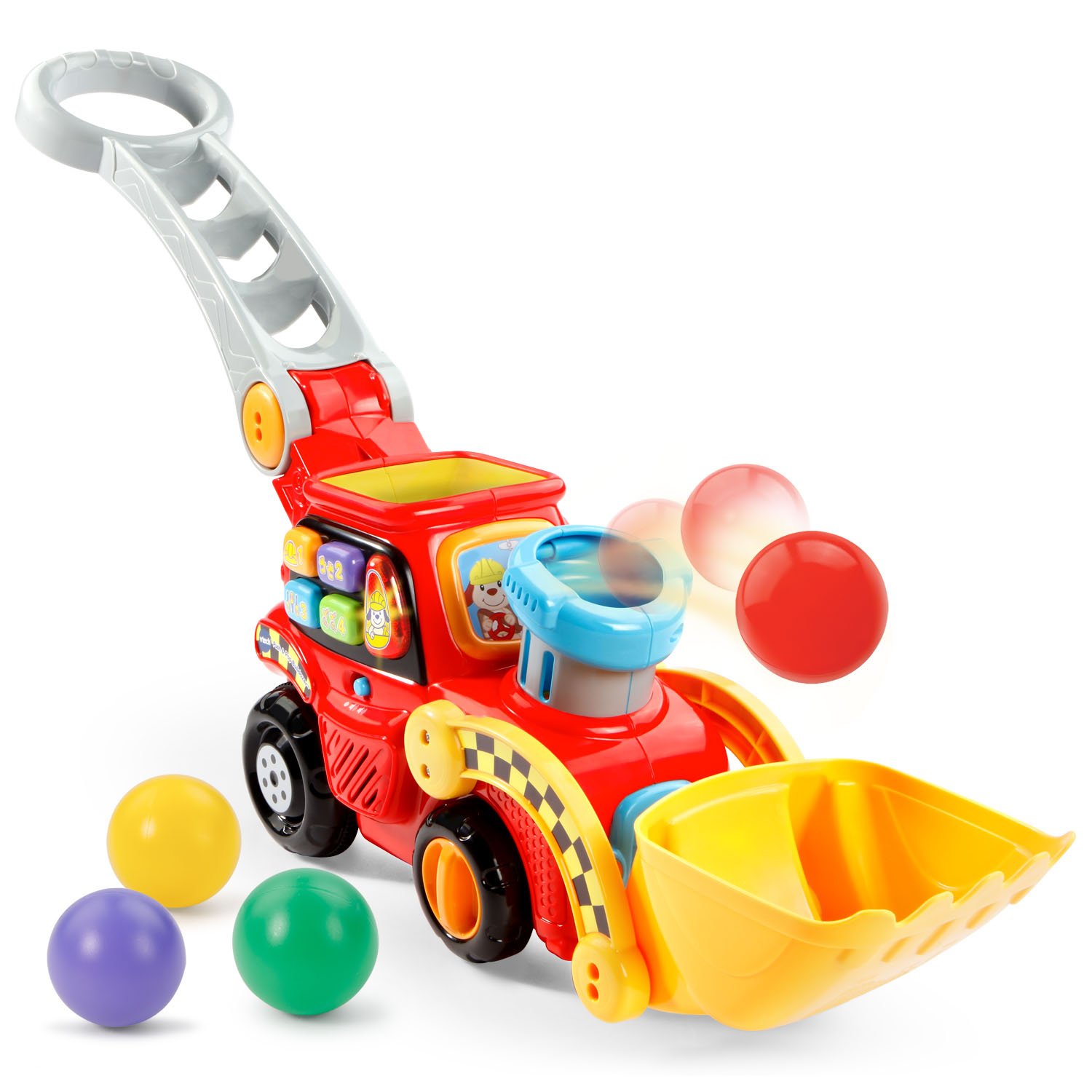
Storybook 22 of 24 · Woodland Friends · in production
And… And…
Target words: joining with and
Understanding · receptive
Join everything with and: “we need the cheese AND the tomato AND the bread!” Shopping-list play.
Using words · expressive
Take picnic orders and demand completeness: “what do you want?” — “apple AND banana AND cake!” The and grows the list.
Finding it tricky? Two items only: “cup and spoon!” — one little and, said with a rhythm they can march to.
Too easy? Join whole actions: “I cut the pizza AND I shared it!” — and starts gluing sentences, not just snacks.
Practise it through play · 3 toy picks
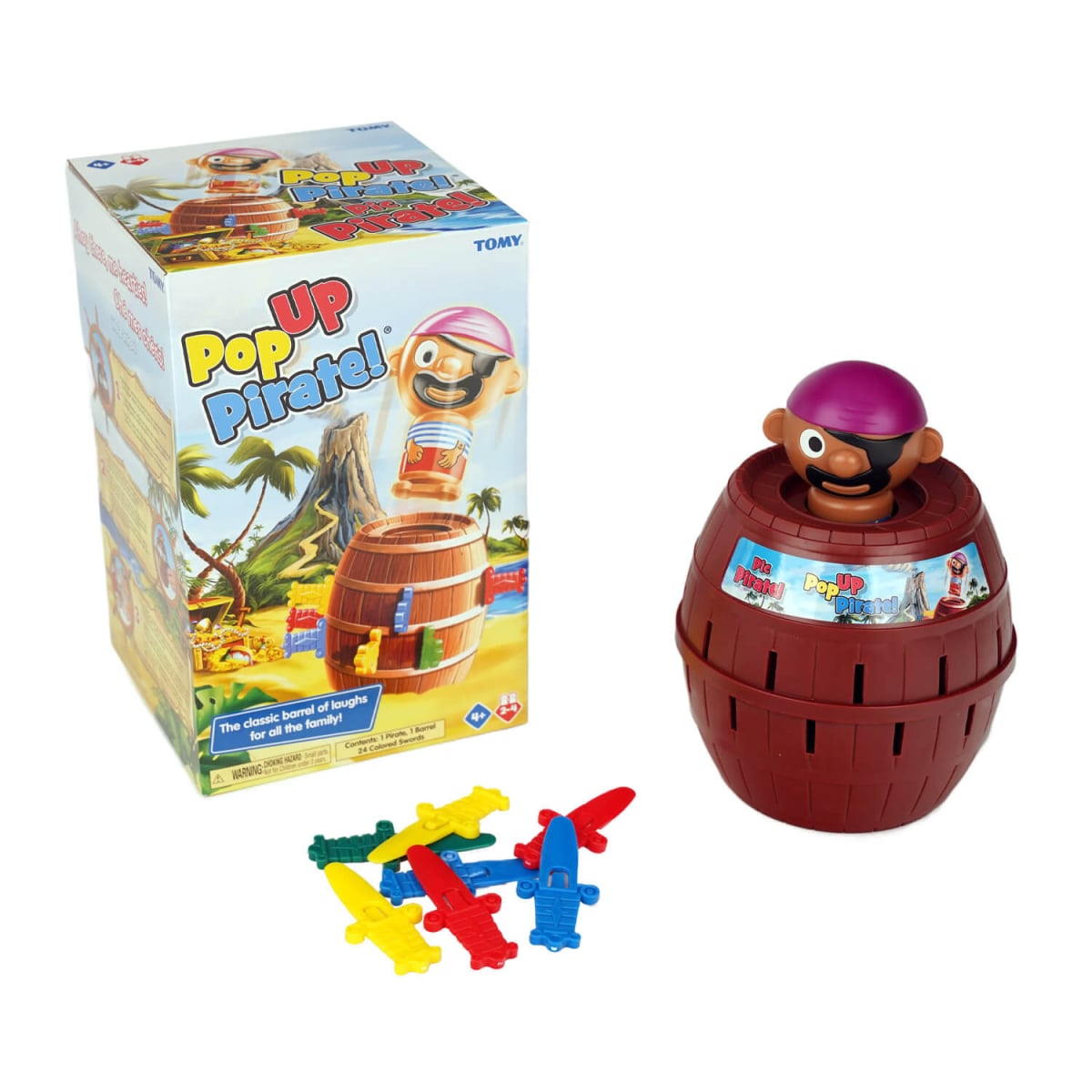
Storybook 23 of 24 · Woodland Friends · in production
Because I'm Cold
Target words: first because
Understanding · receptive
Attach reasons to everything: “jumper on BECAUSE it's cold! Umbrella BECAUSE it's raining!”
Using words · expressive
Ask gentle why questions with obvious answers: “why the umbrella?” — model the frame: “BECAUSE it's raining!”
Finding it tricky? Give both halves yourself and let them finish just the last word: “jumper on because it's… COLD!”
Too easy? Flip cause and effect: “it's raining, SO we need the umbrella” — because and so, the same idea both ways.
Practise it through play · 3 toy picks
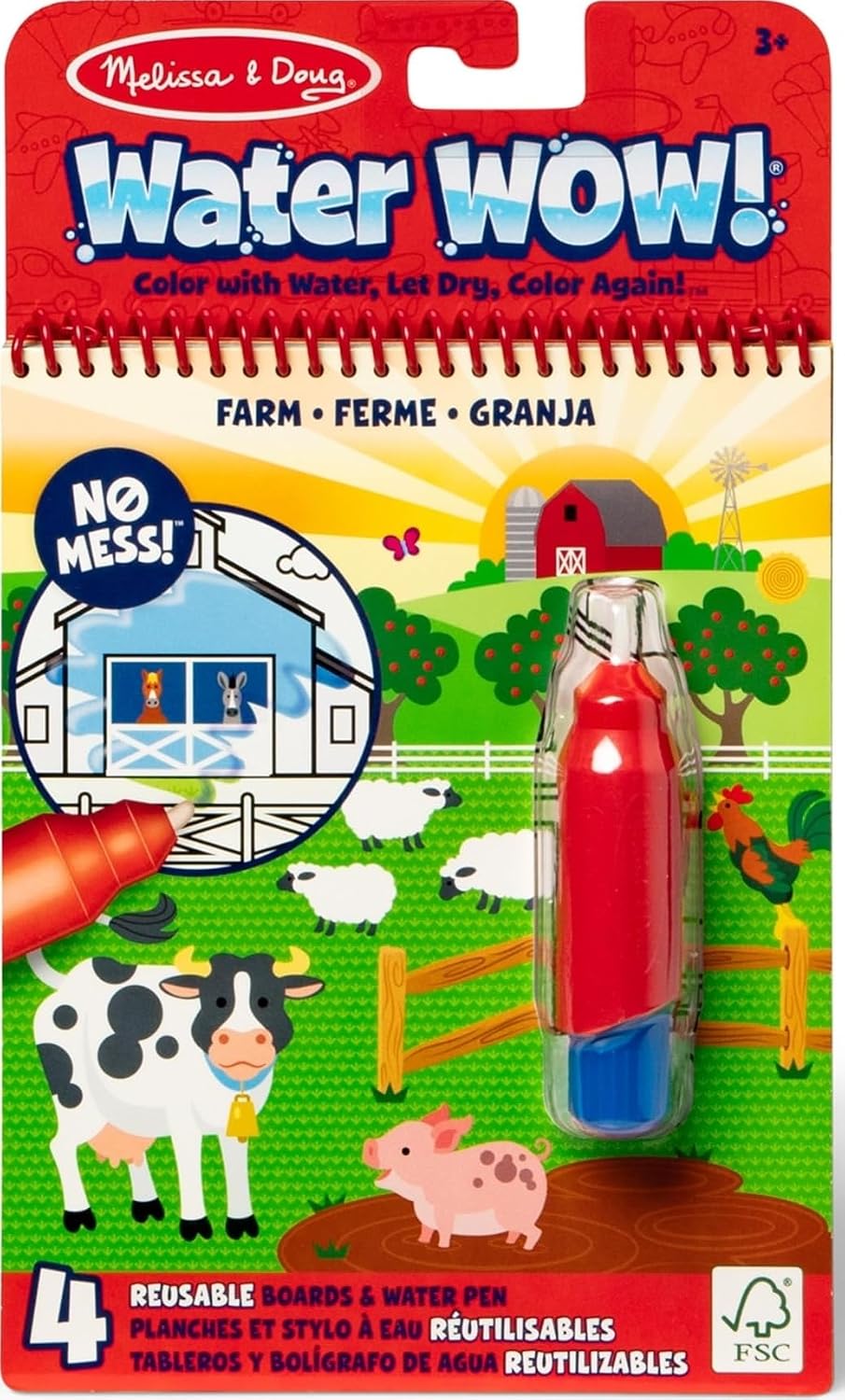
Storybook 24 of 24 · Woodland Friends · in production
Putting It All Together
Target words: Band 4 words in conversation
Understanding · receptive
Run a full pretend scene — ice-cream shop, bus trip — packing in Band 4 words: “FIRST a scoop, he wantS TWO, half each!”
Using words · expressive
Give them the shopkeeper role: taking orders forces questions, quantities, and “anything else?” — Band 4 out loud.
Finding it tricky? Rewind to the band's favourites and play them big: fast/slow races, what/where hide-and-seek. Joy first.
Too easy? Retell the scene afterwards to someone else: “we made a shop and I sold ice-cream and Daddy wanted THREE!” — Band 5 is ready.
Practise it through play · 3 toy picks


Two ways to travel
Two ways to grow your child's talking
Same milestones, same speech-pathologist goals — you simply choose how you get there. Follow the toys, follow Julia's books, or blend both. There's no wrong turn.
The Toy Way
Play the goals with toys
Pick a toy your child already loves. Each one comes with exactly what to say and do — Bronze, Silver and Gold goals from a speech pathologist. Buy the toy, and the play does the teaching.
Julia's Way
Weave the goals into everyday life
Prefer no new toys? Julia's Woodland Friends storybooks and parent handouts show you how to build the same goals into the routines you already have — mealtimes, bath time, the walk to the park.