Animals & Figurines
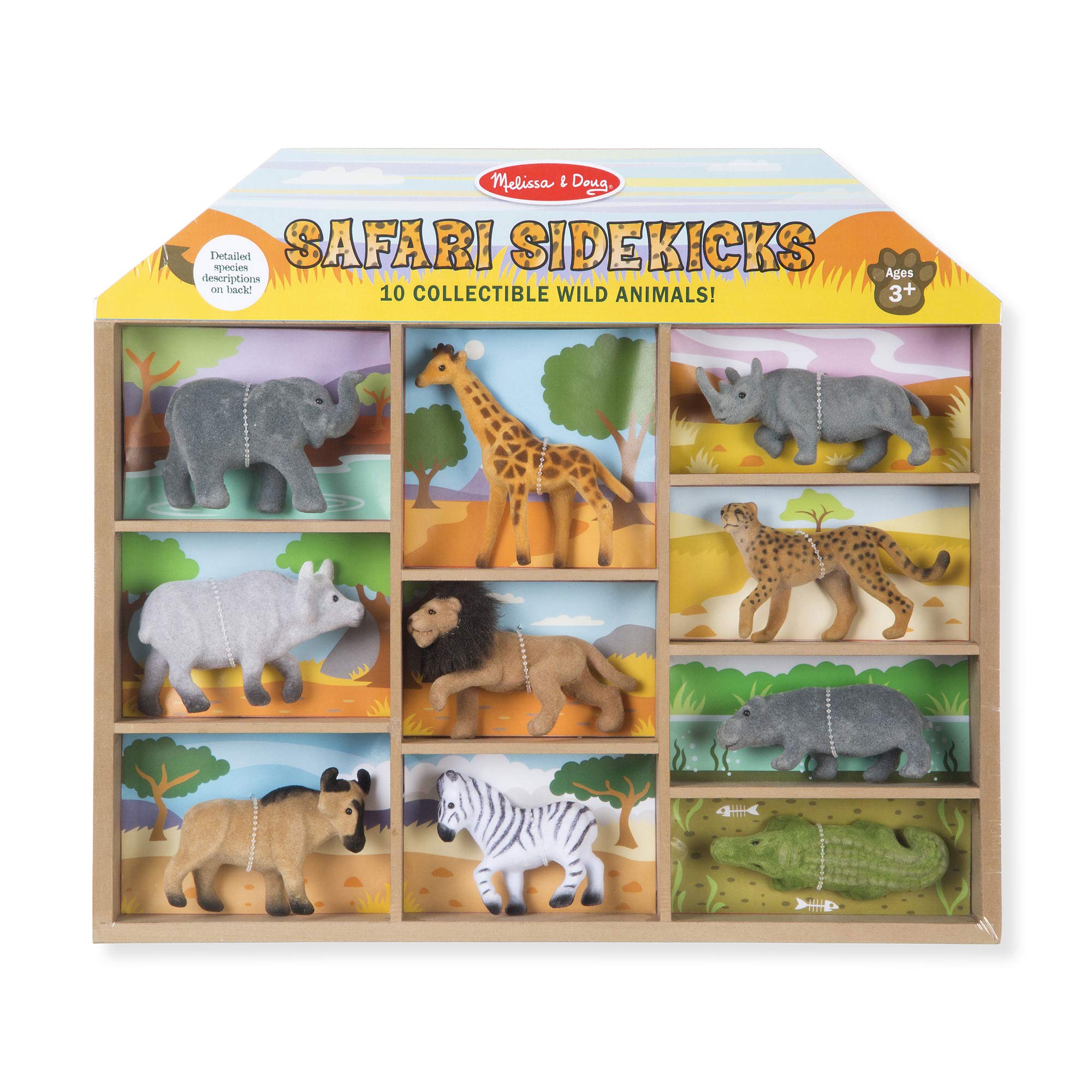
Melissa & Doug Safari Sidekicks
Ten sturdy miniature safari animals — lion, elephant, giraffe, zebra, hippo and friends — in a wooden storage tray. Wild animals unlock a whole new vocabulary beyond the farm: roaring, stomping, sneaking, and dramatic jungle stories.
We earn a tiny amount from qualifying purchases at no extra cost to you.
This toy stars in:
How to Use This Toy for Talking
Let your child explore first — follow their lead. Watch what they look at, copy what they do, and add words to their ideas rather than directing the play. Then weave in the goals below for your child's level. A few minutes of shared, chatty play beats a long structured session every time.
Speech Goals by Level
Pick your child's level — not sure? Read the level guide. Each level shows goals for understanding (receptive language — what your child takes in) and using words (expressive language — what they say). Understanding usually comes first, so it's completely normal for the two to be at different levels. And every card has a step down and a step up — meet your child where they are on the day.
🥉
Bronze · First Words
Understanding · receptive
- Point to animals when named: 'Where's the lion?'
- Follow 'Make the elephant walk'
- Understand 'big' and 'little'
Using words · expressive
- Say 'roar!' for the lion
- Name animals: 'lion!', 'zebra!'
- Say 'big!' for the elephant
- Say 'night night' putting animals to sleep
Key concepts
- Animal names
- Animal sounds
- Big/little
- Walk/run/jump
Finding it tricky? Drop all demands. Just play side by side and say the words for them — hearing words with zero pressure to speak is still powerful learning.
Too easy? If they copy words easily and use lots on their own, peek at Silver: take their word and add one of yours ('pop!' becomes 'big pop!').
🥈
Silver · Phrases
Understanding · receptive
- Follow 2-step directions: 'Get the lion AND make him jump'
- Understand action words: stomping, running, hiding
Using words · expressive
- 'Lion roars!'
- 'Big elephant!'
- 'He's hiding!'
- 'Giraffe eat leaves!'
- 'My hippo!'
Language structures
- Noun + verb (lion roars)
- Adjective + noun (big elephant)
- Pronoun + verb + -ing (he's hiding)
Finding it tricky? Step back to the Bronze single words. Say their word, then add just ONE more ('ball' → 'big ball') — no need for them to repeat it.
Too easy? If two-word phrases are flowing, start modelling the Gold sentences during play and leave a pause — many children will surprise you.
🥇
Gold · Sentences & Stories
Sentences to model · expressive
- 'The cheetah is the fastest animal in the jungle'
- 'The hippo is hiding in the water because he's shy'
- 'All the animals are going to the waterhole to drink'
Higher language
- Creating jungle adventures with beginning, middle, end
- Comparing animals: fastest, tallest, heaviest
- Animal guessing games: 'It has a long neck and eats leaves...'
- Explaining animal facts learned from books
Finding it tricky? Shrink your sentences back to the Silver phrases and slow right down — long sentences are harder to process in the middle of exciting play.
Too easy? Move into storytelling: ask 'what happened?' after play, retell it together, or explore the final bands of the Talking Journey.
Julia's Parent Tip
Add a 'problem' to animal play: the zebra is stuck in the mud, the lion can't find his dinner, the giraffe is scared of the dark. Problems create the need for narrative language — your child has to explain what's wrong and talk through a solution, which is exactly the language they'll need for storytelling at school.
Ready to turn this toy into talk time?
Grab it on Amazon, then come back to this page during play — the goals work best with the toy in hand.


